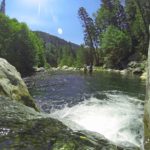
June is when the North Fork Yuba River becomes the place I want to be more than anywhere else on earth. The flows are dropping, the pocket water is emerging from the receding snowmelt, and the wild rainbows — those brilliantly colored fish with their vivid purple parr marks and crimson stripes — are looking up. This is the Great Transition, and if you understand what’s happening on this river in June, you will have days you’ll talk about for years.
The Monkey Flower Secret: Finding Cold Water
Here is one of my favorite pieces of local knowledge about this river, and it’s something you won’t find in any guidebook. When the canyon gets hot and you’re wondering where the most active fish are holding, look at the bankside vegetation instead of the water. Specifically, look for Crimson Columbine and Lewis’s Monkey Flower growing along the banks and rock faces. These plants thrive in the seep zones fed by subterranean springs — the same springs that pump 42°F to 46°F water directly into the river. Where those flowers are blooming, cold spring water is entering the system. And where cold water enters the system, you’ll find trout stacked up and actively feeding.
The North Fork’s spring inflows are one of its defining characteristics, and learning to read the botanical clues along the bank will put you onto fish that other anglers walk right past. Follow the flowers.
Scale Down and Feel Everything
By June it’s time to put away the heavier April setup and go light. A 0 to 3-weight rod is ideal for the North Fork’s crystal-clear pocket water — these lighter rods give you a delicate presentation on gin-clear water AND let you feel every single fish. A 7.5-foot leader to 5x is the right setup. You might be tempted to go 6x for extra stealth, but the granite boulders and heavy current seams of this canyon are unforgiving — you’ll lose too many fish on the break. Stick with 5x and present well.
What’s Happening Hatch-Wise
June brings a tremendous burst of aquatic and terrestrial activity. The Golden Stonefly adults are out, caddis are everywhere in olive and tan, and the early morning and evening hatch activity is genuinely spectacular. The wild rainbows are aggressive and opportunistic right now — they’ve made it through winter and runoff and they are ready to eat.
Top Flies for June
The Yellow Stimulator in size 10 is the undisputed king of June on the North Fork. It’s visible, it’s buoyant, it matches the general size and profile of the stoneflies in the system, and the fish absolutely eat it. Pair it with an EC Caddis in olive or tan as a dropper for the evening hatches when caddis are popping. Keep your dry flies well-treated and riding high — in this fast pocket water, a sunken dry fly is a missed opportunity.
Frequently Asked Questions
What is the best month to fly fish the North Fork Yuba River?
June through September are all excellent, but June has a special magic to it. The flows have come down from peak runoff, the pocket water is fully accessible, the hatches are intense, and the wild rainbows are aggressive. If you can only pick one month, June is hard to beat.
What are the Monkey Flowers and how do I use them to find trout?
Crimson Columbine and Lewis’s Monkey Flower grow in the seep zones where subterranean springs enter the river. These springs pump 42–46°F water into the main stem, creating cold-water refuges that trout actively seek out, especially as air temperatures rise in summer. When you see these flowers blooming along the bank, you’re looking at a spring inflow zone — fish it carefully. It’s one of the best pieces of local knowledge on this river.
What rod weight should I use on the North Fork Yuba in June?
A 0 to 3-weight rod is ideal for June’s clear pocket water. The light rod gives you a delicate presentation and lets you feel every fish. Pair it with a 7.5-foot leader to 5x tippet — avoid going lighter than 5x as the granite structure and powerful seams can break 6x on a good fish.
What are the wild rainbow trout like on the North Fork Yuba?
The North Fork’s wild rainbows are some of the most beautiful trout in California. They carry vivid purple parr marks and brilliant crimson lateral stripes — they look like jewels. Most run 6–14 inches with the occasional larger fish, especially in the lower canyon. They are completely wild, naturally reproducing fish in a pristine mountain environment. Please practice catch and release to keep this fishery healthy.
How crowded is the North Fork Yuba in June?
Access areas near Highway 49 see moderate pressure, but the river is long and the canyon is deep. Even a 15-minute walk from a popular pullout puts you in water that gets a fraction of the pressure. Weekday visits are noticeably quieter. The best fishing on this river has always rewarded the angler willing to explore.
Written by the team at NorthYubaGuide — locals who fish the North Fork Yuba River and its tributaries throughout the seasons. Our mission is to help visiting anglers discover the world-class fly fishing this Sierra Nevada watershed has to offer. For access maps, gear recommendations, and more fishing intel, explore the rest of the site.