Reading the Water: How to Find Fish on the North Fork Yuba River

North Yuba trout water

undefined

Frequently Asked Questions

What type of water holds the most fish on the North Fork Yuba?

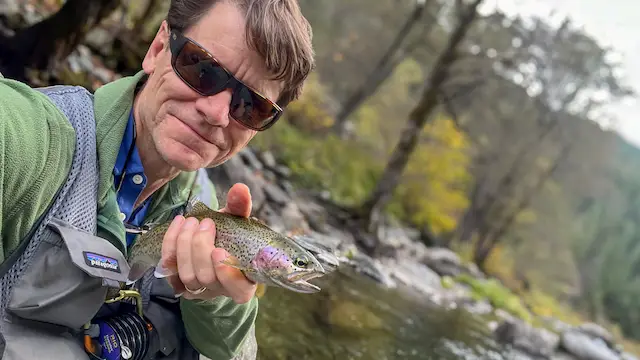
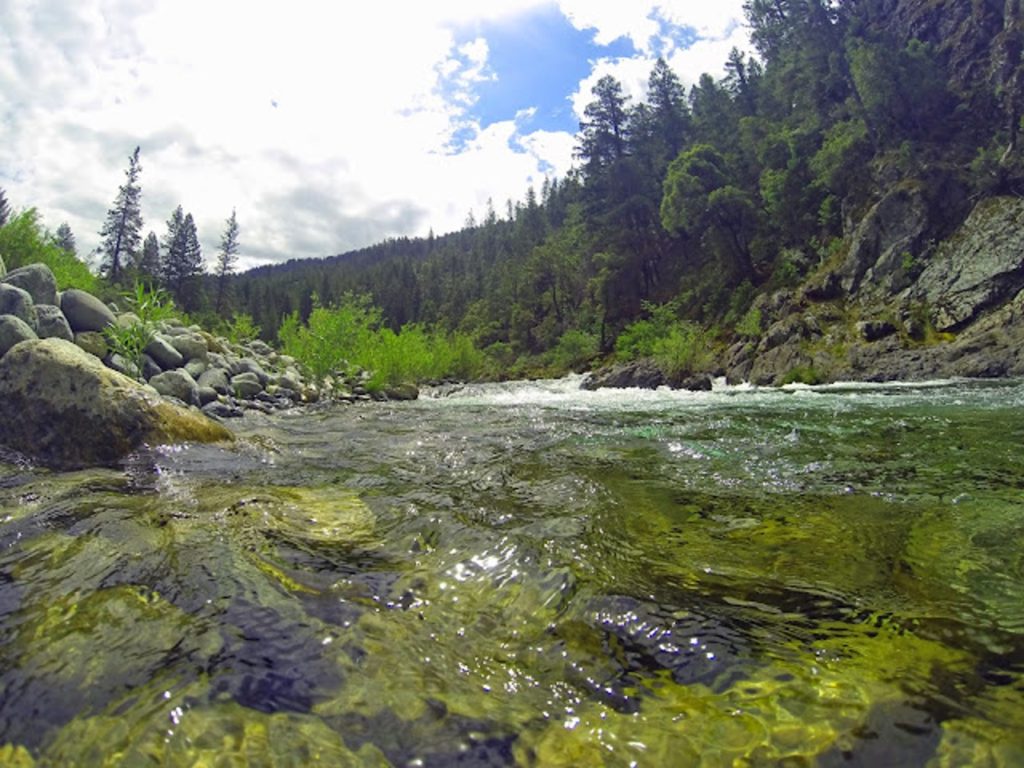
Focus on seams between fast and slow water, foam lines, the edges of plunge pools, water adjacent to large boulders (especially shaded dark water), and any spot with 2–4 feet of depth. The less obvious the lie — a tight pocket behind a boulder, a slot under an overhanging branch — the less pressure it’s seen and the better the fish tend to be.

How important is water temperature when fishing the North Fork Yuba?

Very important, especially in summer. Always carry a thermometer. Trout are most active between 55–65°F. When temperatures approach 68°F, fish become stressed and shouldn’t be targeted. The good news is the North Fork’s spring inflows help keep the upper watershed cooler than most Sierra rivers even during heat waves.

What rod weight is best for the North Fork Yuba River?

A 3-5 weight rod is ideal for most of the river’s pocket water and makes every fish feel incredible. A 5 weight works fine and gives you a bit more versatility for windier conditions or larger attractor dries. Match it with a 7.5-foot leader to 5x tippet as a solid starting point. Short leaders perform better on shorter rods in tight quarters.

Is a fishing license required on the North Fork Yuba River?

Yes — a valid California fishing license is required to fish the North Fork Yuba River. Licenses can be purchased online through the California Department of Fish and Wildlife website. The North Fork Yuba holds wild, naturally reproducing rainbow and brown trout — please practice catch and release to help preserve this incredible fishery.


Written by the team at NorthYubaGuide — locals who fish the North Fork Yuba River and its tributaries throughout the seasons. Our mission is to help visiting anglers discover the world-class fly fishing this Sierra Nevada watershed has to offer. For access maps, gear recommendations, and more fishing intel, explore the rest of the site.

The Yuba River Fishway Is the Right Call — But Let’s Build It Right

March 2026 | North Yuba Guide

I’ll be upfront: I think the Daguerre Point fishway is the right move for the lower Yuba. But I also think the people raising concerns about it deserve a real answer — not a press release.

Here’s the situation.

Yuba Water Agency just hired Teichert Construction to lead the design and pre-construction phase of a $100 million-plus “nature-like fishway” around Daguerre Point Dam. The idea is to carve a bypass channel around the dam so that salmon, steelhead, sturgeon, lamprey, and rainbow trout can move freely through the lower river — something the dam has blocked for decades.

From a long-view standpoint, this is exactly the kind of investment the Yuba watershed needs. Fragmented river habitat kills fish populations slowly, and reversing that damage takes generations. Fish passage restoration is one of the few things we can do now that will still be paying off 50 years from now. The California Department of Fish and Wildlife agrees — they’re putting $30 million into it.


The striped bass problem is real. Don’t dismiss it.

Here’s where I have to pump the brakes on the cheerleading.

That same bypass channel that lets salmon move upstream is going to open a door for striped bass into the 10-mile stretch between Englebright and Daguerre Point dams. That stretch is one of the best trout fisheries in Northern California — partly because the dam has been keeping predators out.

Local fly fishers, including the Gold Country Fly Fishers, have been raising this concern for years. Striped bass are already spreading in the lower Yuba. Shad too. Giving them direct access to the upper stretch is not a small thing.

Wildlife officials say the fishway will benefit all fish species. That may well be true. But “may well be true” isn’t good enough when you’re talking about a fishery this valuable to this community. The anglers pushing back on this aren’t anti-conservation — they know this river. You should listen to them.


The powerhouse rupture changes the context

This decision is landing in a tough spot. The mid-February pipeline rupture at New Colgate Powerhouse was a serious hit. The facility can generate close to $200 million in revenue in a good year — and it could be down for years. There are also reports that more than a thousand juvenile salmon may have died in the lower river when flows dropped during the emergency.

Yuba Water has said outside grants and funding will slow down while they focus on recovery. At the same time, they’re moving forward with the fishway because it’s too far along and too well-funded to stop now.

That’s a reasonable call. But it means the community needs to stay in the conversation.


Taking the long view

The Yuba River isn’t going to fix itself. The habitat damage upstream of Daguerre Point Dam has been building for over a century. If we want wild salmon and steelhead in this drainage for the next generation — and the one after that — we have to make hard investments now.

The fishway is one of those investments.

But taking the long view also means protecting what’s already working. The trout fishery on the upper lower Yuba is something people have built and cared for over decades. That doesn’t get thrown away lightly.

The ask is simple: put the strongest possible fish screens and selective passage measures at the upstream entrance of that bypass channel. Monitor it closely after it opens. And commit to intervening fast if the predator population shifts in a bad direction.

Get both things right — the salmon passage and the trout protection — and this project is a legacy investment for the Lost Sierra. Get it half right, and we’ll be dealing with the consequences for a long time.


The Sacramento Bee reported on the Yuba Water Agency’s fishway decision in a March 19, 2026 article by Jake Goodrick.

What’s your take? Drop it in the comments. This is your river too.

Yeah, they’re here

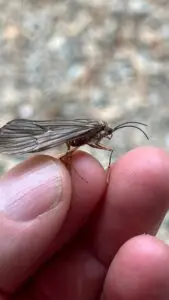
October Caddis on North Fork Yuba River

The October Caddis are on the North Yuba


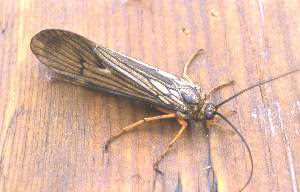
Fly fishing for October Caddis on the North Fork of the Yuba River is an exciting pursuit that draws anglers eager to match the hatch of this large, distinctive bug. The October Caddis, also known as Dicosmoecus, emerges in the fall and is a significant food source for trout during this time. The North Fork of the Yuba, with its clear, fast-moving water and diverse structure of riffles, runs, and pools, provides an ideal habitat for these caddisflies. Fishing here during October can be highly productive, as trout become aggressive feeders, taking advantage of the abundant caddis emerging from the riverbed.

The best strategy for targeting trout during the October Caddis hatch involves using dry flies or emergers that imitate the adult or pupal stages of the caddis. Large, orange-bodied dry flies like a size 8-10 Elk Hair Caddis or Stimulator can be effective, especially during the afternoon when adult caddis are active. In addition, fishing a nymph pattern, such as a beadhead caddis pupa, through deeper runs can yield strikes, as trout often feed on caddis pupae before they emerge. Anglers should also pay attention to the river’s flow and light conditions, as trout are often more responsive during low light periods, such as early morning or dusk. This combination of tactics can make for an unforgettable day of fly fishing during the October Caddis hatch on the Yuba River.

October Caddis on North Fork Yuba River

Now is the time for larger fish on the North Fork of the Yuba

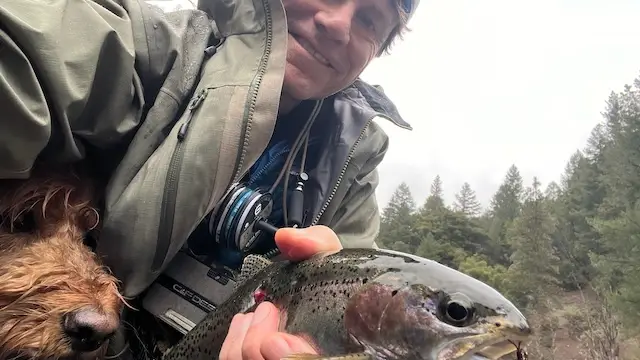
It may be cold but there are some large rainbow trout in the North Yuba right now.  You’ll have the best luck with a streamer or nymph in the deeper water.  If you can get on the water before the snow melts and increases the flows, you’ll find some larger fish that have come into the river from Bullards Bar Reservoir. 

Bring layers and be ready for the big temperature swings.

Right now, there is not bait fishing allowed and you can’t keep any of your catch.  This river is well patrolled by Game Wardens.  You can get your fishing licence online or at the hardware store in Downieville. 

Large trout on the North Fork Yuba River

Safe wading video

The above video from Orvis will give you some good tips on safe wading.

A wading staff makes a huge difference.  A staff can be a dowl with a bike grip, a stick, or a purpose built wading staff. Orvis currently has the best wading staff available- it’s very light, fast to deploy, easy to store, and is sturdy.  They are not cheap, but if you use it, it’s money well spent.

Fall is the best time to fish the North Fork of the Yuba River

Fly Fishing North Fork Yuba River Fall 2023

Fishing near Downieville is best in the Fall

Fishing up at the North Fork Yuba River has been absolutely fantastic lately! It’s that time of year when pretty much every body of water is teeming with action, and fall is hands down the best season for anglers here in Northern California. Right now, the water temperatures are hanging around a comfy 53 to 58 degrees. What’s even better is that there’s hardly any fishing pressure, and the campgrounds are practically deserted.

If you’re planning to fish the North Yuba, you’ll want to head downstream of Downieville. Look for those sunny spots that October caddis love – they enjoy basking in the warm, sunny bends of the river. The water characteristics in the lower watershed are quite different from the upper areas. You’ll find longer runs, riffles, and fewer pocket water spots, not to mention some bigger fish lurking around.

For the best fishing experience, aim to be out there during the warmest part of the day, roughly between 11 am and 4 pm. The trout are getting pretty excited about Blue-Winged Olives (BWOs), October Caddis, and other smaller caddis, so those are good flys to use. Whether you prefer tight line nymphing, using a dry/dropper setup, or going with dry flies, all of these approaches have been proven to work well.  I generally tight line (euro nymph) unless I see trout feeding on the surface.

While I haven’t spotted any brown trout on redds just yet, I’m pretty sure that they’re coming soon. With the upcoming warmer weather this weekend, a camping and fishing trip to the North Fork Yuba River with those beautiful fall colors is something you won’t want to miss!

October Caddis
Fly Fishing North Fork Yuba River Fall 2023

September Fishing Report North Fork Yuba River

If you’re planning to do some fishing at the North Fork Yuba River, things are looking pretty good. From the upper areas down to Downieville, you’ll find some decent action. The water temperatures have dropped a bit due to the colder nights we’ve been having.

The silver lining is that you won’t have to deal with too many other anglers – it’s pretty quiet out there, especially in the middle of the week. As the water levels have receded for the season, the trout are gathering in the larger plunge pools and runs. To catch the bigger ones, keep an eye out for those deeper pockets. Happy fishing, and enjoy the solitude!

A basic Dry/Dropper rig will work fine, a big bushy rubber legged stimulator or the equivalent, with a red copper John underneath. Purple is another great color. Don’t forget about hoppers and ants in the afternoon when warmer air temperatures make them more active. Mayfly spinner fall has been on one day, and sparse the next. A few big Pale Evening spinners in the mid morning, and a resurgence of caddis during the day. It’s not necessary to be on the water early with these cooler temps, starting at 10am is fine.

If you don’t mind hauling two rods, bring a shorter and lighter dry fly rod for the dry dropper and a longer and lighter rod for tight line nymphing.

Riding the Downieville Downhill, the all-time best mountain bike trail in California

DownievilleDownhill
Downieville Downhill on Trailforks.com

Start with the Sunrise Trail

In the realm of trail adventures, the Sunrise Trail marks the starting point atop Packer Saddle, accessible through various shuttle options. It presents a delightful, flowing path, adorned with machine-crafted berms, albeit occasionally marred by skidding. To enhance the thrill, it boasts enticing tabletops and whoops.

On the left, an alternative trail emerges, known as Pack Saddle Loop, seamlessly merging with the Sunrise Trail. Both options offer similar amusement, yet the less frequented left route may hold superior condition, a hidden gem awaiting discovery.


Butcher Ranch Trail- what the tire is named after

Venturing into the treacherous terrain of Butcher Ranch, brace yourself for an onslaught of challenges. Here lies the apex of technical difficulty on the Downieville Downhill, encompassing treacherous rock gardens, capable of leaving your teeth clattering and wrists aching.

The upper portion of Butcher Ranch, while more serene, commences with a series of switchbacks through the forest and open scrubland, presenting an exquisite visual feast. Embrace the scenic beauty and savor the moment at a leisurely pace.

Descending to lower Butcher Ranch elevates the intensity, introducing sections replete with devious rock gardens, including the formidable Waterfall, among the most formidable obstacles along the entire trail.

As you near the conclusion of Butcher Ranch, the rugged rock gardens give way to loamy earth and playful switchbacks meandering through captivating forests. Upon completing the switchbacks, a dash of technical climbing and narrow sidehill traversal with exposed edges awaits. However, after surmounting these challenges, a smooth journey ensues, culminating in a modest climb to Third Divide.


Third Divide, heavenly dirt

Welcome to the realm of Third Divide, where exhilaration reaches its zenith, courtesy of velocity and fluidity. However, tread cautiously, for the play of dappled light through the forest canopy obscures features and rocks, leading to harrowing encounters with the unexpected. My personal experience attests to several heart-stopping moments on Third Divide, where hidden rocks and roots caught me off guard.

For most adventurers, Third Divide stands as the pinnacle of the Downieville Downhill, providing an abundance of joyous escapades. Yet, be mindful of the conclusion—a steep and treacherously loose descent leading to the river, where a bridge awaits. Exercise restraint in maintaining your speed, as it is all too easy to surrender control in this particular stretch.

Upon concluding the thrill ride on Third Divide, a gentle descent along a dirt road ensues for just under a mile, followed by a well-timed right turn onto First Divide. Should you find yourself pedaling up a substantial incline on the road, you have inadvertently surpassed your intended destination.


First Divide, easing up with nice river views

First Divide serves as a fusion of Butcher Ranch, Third Divide, and a sprinkle of cross-country pedaling. While certain rocky features pose a challenge, an abundance of flow and speed awaits. Along much of the trail, the tumultuous currents of Lavezzola Creek gracefully parallel your path on the right, occasionally revealing the grandeur of massive cliffs. Stay vigilant and keep your gaze affixed to the trail, averting any unnecessary mishaps.

Finally, First Divide brings the Downieville Downhill to its conclusion, punctuated by a series of brief yet steep ascents. At this juncture, the town once again beckons, offering the opportunity for another exhilarating round.

Downieville E-MTB: The Perfect E-Bike Ride for Intermediate Riders.

Ebike Ride Downieville

You don’t need to pay for a shuttle in Downieville to get some great riding in.  This trail is excellent for a e-mtb bike or excellent for a strong rider on an analog bike.   The trail is challenging but not so much that you’ll need a helicopter rescue.  This 25 mile, out and back will be rewarding

Find the parking lot at the end of Durgan Flat Way.  It’s 1/4 West of the courthouse.   The trail starts right there.  It follows the North Yuba for a quarter mile, then you climb into the forest.

You’ll climb through some beautiful forest as you gain altitude with some fun switchbacks.  When you  get to a bridge, take a break and cool off.  The creek is spring fed, so it’s cold and chills that little area.

From the bridge, continue on traversing the slope to your decent.  This is the first of three excellent descents… watch your speed and call out on blind corners.  The trail is skinny with a steep drops throughout – not a serious as the drops on 2nd Divide, but steep.. 

The Upper Section of the North Yuba Trail drops you onto The Old Toll Road in Good Years Bar.  You’ll be back to the edge of the North Yuba.  Go Left and follow the river flow into the tiny town of Good Years bar.  At the stop sign go right across a bridge over the river and up to Highway 49.  From here go Left for about a 1/4 mile.

Look for the road marker 11.92 a seen below.  The trailhead to St Charle Hill can be seen in the right side of the photo.  Take this skinny trail up to find some Golden Singletrack.  Some of the local elitist riders have somehow forced this trail off of trailforks.  Some of these guys claimed building the trail…they may have cleaned it, but they didn’t build it.  We all own this property.  Enjoy it.

Start of St Charle Hill Trail

A short distance will bring you to a unique sign made from chainsaw parts.  Go Right here.  Thanks to the dirt bikers that put this trail in.  In the Fall of 2021 I helped some local MTB boys clear some of the upper section of fallen trees.  It take a village to raise a trail.

St Charle Hill sign

If you want to grab some GPS information, take a look at the Strava link below.  It also has a video of a Black Bear that I found near the top of St Charles Hill and some photos.  It’s a great ride- Do It.

Also, in this Spring of 2023, the fishing is junk due to the massive runoff.  You can catch fish but it is not productive and walking around the river right now is pain as well as dangerous.  

If Strava isn’t you jam, below is a link to Ride with GPS info.  Hope this helps you enjoy you time in the Lost Sierra.