Casting a nymphing rig easily

casting a nymph rig image

Take a look at the video of Pete Kutzer and Tom Rosenbauer of Orvis demonstrate how to easily cast and fish a nymph rig.  We all learn to cast dry flys first, but in reality, we’re going to catch more fish with flys that sink.  Subsurface nymphs imitate what trout eat most often.

More lessons can be found at Orvis here

Report: it’s cold. Spring is going to be late.

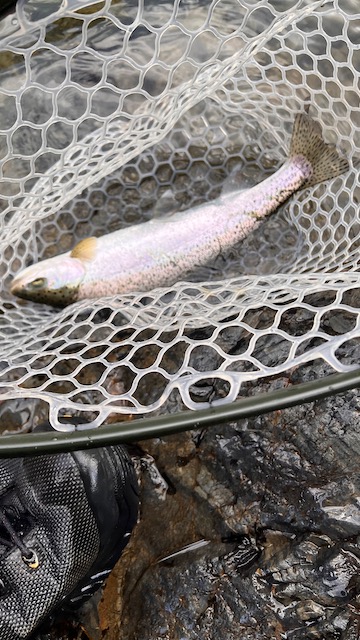
North Yuba Rainbow Trout

As expected, the water is cold and the fish are on the bottom.  I landed this 17″ yesterday below GoodYears Bar.  It was hanging near the bottom.  It and a neighbor took a heavily weighted jig fly that I came up with last year.  I  call it the Money Fly.

I fished for an hour (2-3).  The water is cold and the fish are cold too.  You’ll have better luck on the Lower Yuba.  You may get a chance to throw some dry flys on the LY. 

The snowpack around the Yuba Pass is light.  When the heat comes, that snow will melt off quickly.   At this point, it seems like we’re going to have another low-flow year.  Plan on fishing May and part of June on the NFY.    Unless we get a surprise storm, plan on fishing tail waters (rivers coming from the bottom of dams).

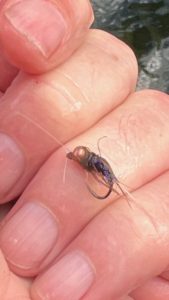
The Money Flyly

The Money Fly gets down fast and is buggy.  This fly has been a consistent success on the North Yuba and other free stone rivers

Stonefly facts

Stone fly

From Orvis:

Insect Facts: The Family Stone


On this common species (Agnetina capitata), you can see the clear segmentation, gills, and the stonefly’s distinctive profile.
Photo by Bob Henricks, licensed under the Creative Commons Attribution-Share Alike 2.0 Generic license

Fly fishing is a sport that often defines itself by the minute scale of the patterns that anglers present to finicky trout, and it’s not unusual to hear an “expert” brag about his success casting size 24 or 26 midges on tiny tippets. But at the other end of the scale are the stoneflies (order Plecoptera), a group of insects prized for their sheer bulk, which dwarfs that of most mayflies and caddisflies. A turned-over a rock on a freestone stream can yield several species of insect larvae, but stoneflies will immediately stand out because they are often several times larger than anything else. Imitations of these outsize larvae are favorites of anglers who believe that “big flies equal big fish,” as well as for those fishing during high water.

What’s in a Name?

The common name “stonefly” is almost certainly a reference to the kinds of streams in which the larvae of many species are found—freestone rivers that feature rocky substrate and well-oxygenated, clean water. It makes sense that the order’s common name should be derived from the most common habitat of the nymphs, since many stoneflies exist in the larval stage from one to three years and their discarded nymphal shucks are often found on stones in midstream or along the bank. The Latin name Plecoptera comes from the Ancient Greek for “braided wings,” and is based on the way the four heavily veined wings of the adult lie atop one another along the insect’s back. Strange that the insect should be named for its wings, since the large insects are such clumsy fliers.

Life History and Habitat

There are approximately 3,500 species of stoneflies worldwide, and they are widespread, found on every continent except Antarctica. In North America, there are close to 600 species, ranging from the diminutive slender winter stonefly (family Capniidae) to the monstrous Western salmonfly (Pteronarcys californica), whose larvae can grow to longer than two inches.


The Western salmonfly is a clumsy flier and a big meal for a trout.
Photo by Phil Monahan

Taxonomists usually divide stoneflies into two suborders: Euholognatha, which includes four families in North America, generally hatch more heavily in winter and spring; and Systellognatha, of which there are five families in North America, hatch in summer. Of the former group, the ones that fly fishers will best recognize include slender winter stonefly and early brown stonefly (Strophopteryx fasciata). Systellognatha includes the giant black stonefly (P. dorsata) of the East and Midwest, and the classic Western salmonfly and golden stoneflies (Family Perlidae).

The stonefly life cycle involves an incomplete metamorphosis, which means that there is no pupal stage, and the nymphs look much like the adults. In general, the larger the species, the longer larval development takes, with some species spending three years in this stage and molting more than 20 times. (The stages between molts are called “instars.”) When it’s time to hatch into winged adults, most stoneflies migrate to the bank and climb out of the water before transforming; they do not hatch on the water’s surface, like most species of mayflies and caddisflies. This is one reason that nymph imitations are more popular among fly fishers than patterns that mimic the adults. Most of the time, adults are available to trout only when they are blown onto the water—which is fairly often, given their poor flying skills—and during egg-laying.

Because many Plecoptera nymphs get oxygen from the water via filamentous gills, they are intolerant of pollution. In fact, the presence of a healthy stonefly population is seen as an indicator of good water quality. This is somewhat ironic, since stoneflies are closely related to cockroaches, which are seen as evidence of filth. Although most species prefer swift well-oxygenated water, there are species that inhabit the leaf litter at the bottom of slow-moving stretches and even a few whose larvae live on land in wet environments.


The Skwala stonefly is one of the first to hatch in the spring throughout the West.
Photo by Bob Henricks, licensed under the Creative Commons Attribution-Share Alike 2.0 Generic license

Patterns and Tactics

According to W. Patrick McCafferty’s Aquatic Entomology, the oldest artificial fly on record was an imitation of a British stonefly adult. While today there are many popular adult patterns—the Stimulator chief among them—that number is dwarfed by the nymph options available to anglers: from close imitations, such as the Kauffman Stone, to more suggestive patterns, such as Pat’s Rubberlegs. Even a small Woolly Bugger, fished on a dead-drift can serve as an effective stonefly pattern.

The one common denominator among stonefly-nymph patterns is that they are usually heavy, incorporating weighted wire into the body or a metal bead (or two). Since stonely larvae are crawlers—and relatively poor swimmers—they stay close to the bottom, which is where your fly needs to be. Before emergence, many species migrate toward shore, and a nymph imitation crawled or swing from deeper water to the shallows can take trout or bass keying on this migration.

Link to original article

And now for something a little different

Helgramite

First off, they bite.

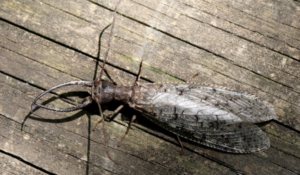
The Hellgrammite is a nasty aquatic inset that lives in the North Yuba.  They are not as common as the Big Three: Caddis, Mayfly, and Stonefly, but they are in there and the fish know it.  They can be confused with a large stonefly at first.  If you see a couple of big pinchers coming off the head- it’s a hellgrammite. 

The hellgrammite is a big meal for a hungry trout.  If you’re after the big fish, this is your key to success.  A dark brown Wolly Bugger with crystal flash is a pretty close imitation.  Dead drift these in deeper pools where there is some structure for larger fish to hide.

The hellgrammite can live as an aquatic for one to three year before becoming an adult.  Their presence is a good indicator of a clean and healthy river.

The adult of this is the Dobson Fly is a large flying insect- the look like giant moths with large pincers.  These can be found around porch lights in the Summer months.

Dobson Fly

Check out this great film on the Mountain Biking in Downieville

Downieville Downhill

This is a wonderful film about the town of Downieville and it’s main attraction- the epic single track trails in the area.  This film focuses on the famous Downieville Downhill.  I’ve been mountain biking since the early days of dirt bike parts on bikes.  This is still the best riding that I’ve experienced.  Get some!

The video was put together by Outsider MTB.  You can check out their other videos here.  The video has some sponsorship from The Carriage House Inn, a great spot to stay in town.  It’s literally 100′ from the two shuttle services and sits right on the river. 

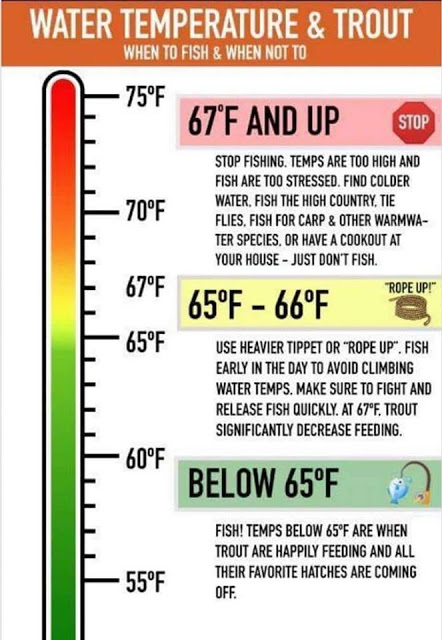
Know when to stop due to water temperature

North Fork Yuba River 1016 Martin Cleary

This crazy heat and low water flows are not good for our fisheries. 

It’s time for a voluntary “Hoot Owl” closure for the livelihood of wild trout within the system. You can do your part by doing the following:


  • Carry a thermometer and take readings on the hour
  • Fish at first light until 11am
  • Use bigger tippet sizes to fight fish more quickly for a safer release
  • Stop fishing when water temperatures reach 68 degrees or higher
  • Educate other anglers on water temperature etiquette

With hot water temps, there are other alternatives when it comes to fishing for trout. Fish the high alpine lakes, tailwaters that provide cold water, rivers that are spring fed, or have numerous cold inflows of feeder creeks. Your actions dictate the future of wild trout in the rivers that you love to fish.

In the case of the North Fork Yuba, just head upstream to Sierra City or above.  Look for side springs- they are always running cold. 

Hoot Owl Closure

Tie your wading boots so they stay tied

tie wading boot laces

Even with a double bow, they come untied!!! They don’t need to…there’s a little secret.  We’ve been doing it all wrong.  Change one simple step in the knot and BAM- they stay tied.  Tripping over your laces is no fun, doing it with a couple of $1000 rods in your hands in rocky terrain can ruin your day.  Check out this video:

A NorCal Fly Fishing Meca

Pauley Creek Guide

  Below the dramatic Sierra Buttes, rain, snowmelt, and natural spring come together, and The North Fork Yuba River is born. The upper reaches of this river are strewn with car sized granite boulders and terrain covered with Manazita, Oak, and conifers. Rainbow and Brown trout are eager to feed in the 100s of plunge pools that step their way down the canyon. The North Yuba also attracts anglers from all over the state who make their own journey to ply the waters whether it is by fly or lure. Here is a place than can offer unbound beauty, adventure, solitude, and a chance to hook into a trophy trout!

As you make your up Highway 49 from Nevada City there are numerous major access points along the way upstream after the first bridge crossing near the Canyon Creek trailhead. Other obscure access areas are mere pullouts with steep descents down to the river and only for the most adventurous souls. What sets this river apart from the many grand waters of Northern California is the type of water preferred by fly anglers; pocket water, pools and gin clear water.

The North Yuba is open year all year for fishing but with special regulations. There is a “wild trout” section from Sierra City to Ladies Canyon Creek and only barbless flies and artificial lures may be used with a two fish limit if one decides to keep their catch. Most fly anglers practice “catch and release” fishing so that the populations of wild trout may grow bigger and provide others with the enjoyment of catching the big one. The California Department of Fish and Wildlife’s regulation booklet provides all the information a visiting angler needs to be legal here and should be reviewed before venturing out onto the water.

Winter and spring conditions are rather tough for successful fishing, low water temperatures and high water makes it difficult for even expert anglers. The most productive fishing takes place after spring runoff has ended which normally takes place sometime in May. As summer engulfs the North Yuba so do the aquatic insects that the wild trout eagerly dine on. Hatches of mayflies, caddis, and stoneflies fill the air and offer exciting “dry fly” fishing, presenting flies that float on the surface of the water enticing a trout to rise to the occasion and devour the artificial offering. Great fishing continues through even the hottest dog days of summer as the upper river still provides cold water. Fall is a special time on the North Yuba, leaves glow showing their spectacular colors and the trout feed more aggressively knowing they have to fatten up for the long cold winter months ahead of them. There is also a special aquatic insect that hatches this time of year and even has a cult following amongst fly anglers. The October Caddis is a large specimen with a burnt orange color that brings up some of the largest trout for a floating prime rib dinner drifting down the currents.

There are no special tackle requirements to fish the North Yuba, a 3-5 weight rod matched with a floating line and leaders to 4-6x will perform nicely.  A dry/dropper will land you the highest fish count.  Save the dry only for the late afternoons. Sierra Hardware in Downieville is the only place in the area you can find terminal tackle and a large assortment of the “go to” flies that work best on the river. The store owner has been helping fly fishermen for the last 40 years- she knows what works.

The North Fork Yuba is a fascinating river with a surprise around every corner. This fishing has a shorter season than some of the famous tailwaters.  This is an excellent place for a beginner- the fly choice is not critical and the casts tend to be short.  Just don’t let them see you coming.  There are some larger fish that can be taken by the more seasoned angler.

Most of the fish are small and are not suited for the pan -put em back.

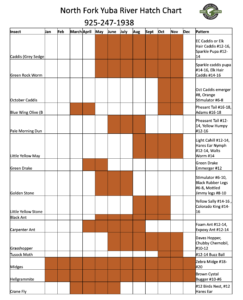
North Yuba River Hatch Chart

North Fork Yuba River Hatch Chart

I put together a hatch chart for the North Fork of the Yuba River.  Given the length and elevation changes of the river, some of the insects will start to arrive in the lower sections before they arrive in the upper sections.  Also, when the Brown Trout come up for Bullards Bar Reservoir, streamers can be used as well as egg patterns.

For a larger chart, please go HERE.